Solution 6: AMR mobile manipulator – Integrated servo for travel + operation combination
• Matched products (per‑vehicle‑weight grading)
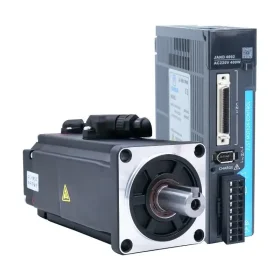
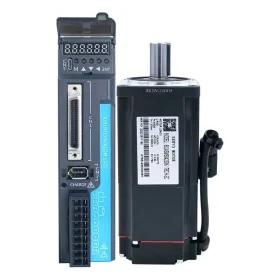
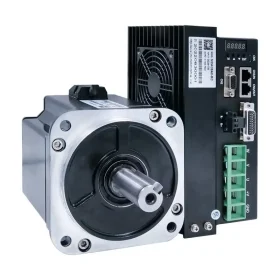
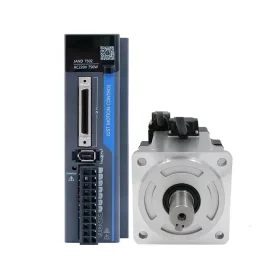
Light AMR (vehicle ≤200 kg): Travel axis: IESV80‑30‑75‑48‑EC (48 V, 750 W, rated 2.38 N·m, peak 7.14 N·m, 17‑bit, EtherCAT); arm joints: IHSV60‑30‑40‑48‑EC (48 V, 400 W, 1.27 N·m)
Medium AMR (vehicle 200–600 kg): Travel: 130ASM1500‑5‑17BCQ‑DB15 (48 V, 1500 W, 4.78 N·m, peak 14.34 N·m) + MCAC845‑23B‑EC; arm joints same or upgrade to IHSV86‑30‑44‑48‑EC (48 V, 440 W, 1.4 N·m)
Heavy AMR (vehicle >600 kg): Travel: 130ASM3000‑5‑17BCQ‑DB15 (48 V, 3000 W, 9.5 N·m, peak 28.5 N·m) + MCAC8A0‑23B‑EC or dual‑wheel drive (2×1500 W)
• Applicable equipment
Composite robots (AMR + light arm), mobile manipulators, smart warehouse picking robots
• Technical features
All low‑voltage (48 V) supply meets SELV for mobile equipment;
Integrated drive, control, communication – minimal volume for compact mobile platform installation;
17‑bit encoder provides closed‑loop odometry for travel (eliminating slip errors) and arm joint accuracy;
EtherCAT bus coordinates chassis travel + arm operation (sync jitter <1 μs);
Battery‑power optimised with low standby power (<5 W);
Selection constraint (critical): 750 W (2.38 N·m) only for light AMR (vehicle ≤200 kg); 200–600 kg must use 1500 W (≥4.78 N·m); >600 kg must use 3000 W (≥9.5 N·m) or dual‑wheel drive;
IP54/IP65 optional (mobile chassis environments).
• Selection boundary
Suitable for AMR travel + arm composite scenarios; travel axes must use servos (steppers prohibited) and strictly follow vehicle‑weight grading above.